Powering Minimally Invasive Interventions for Lung Diseases
Advancing precision-driven treatment with AI imaging
Built on advanced AI capabilities in lung segmentation and quantification, our technology interprets thoracic CT data with anatomical precision - mapping airway trees, parenchyma, and vascular structures, even in complex or severely diseased lungs. Anchored in the LungQ® platform, our proprietary technology supports the entire interventional pathway, from pre-procedural planning and intra-operative navigation to post-treatment assessment.
We partner with leading MedTech companies developing interventional devices, navigation technologies, and robotic bronchoscopy systems to advance the next generation of precision-driven pulmonary interventions.
Why MedTech industry trusts our technology
Market-unique segmentation & quantification capabilities
Accelerated path from technology to clinically ready solutions
Proven track record in interventional pulmonology implementations
Technological capabilities to accelerate innovation
Our AI-powered lung analysis methods enable accurate assessment and visualization of lung anatomy and pathology, supporting the development of image-guided interventional solutions.
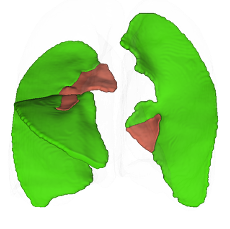
- High-resolution segmentation of anatomy and pathological features across lobar, segmental, and subsegmental levels
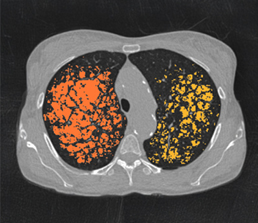
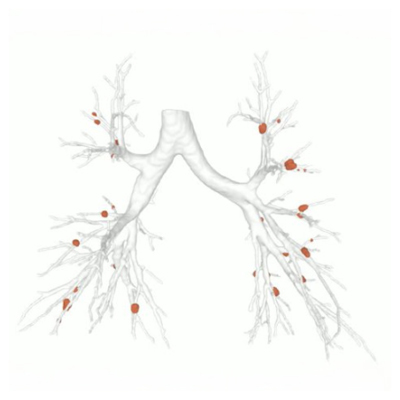
- Quantitative analysis of parenchymal, bronchial, and pulmonary vascular abnormalities (e.g., emphysema, mucus plug, vessel and interstitial lung abnormalities )
- Image registration supporting navigation planning and intra-operative guidance
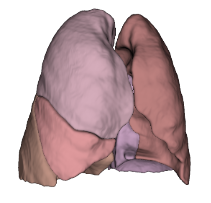
Lung Lobes
Anatomical segmentation
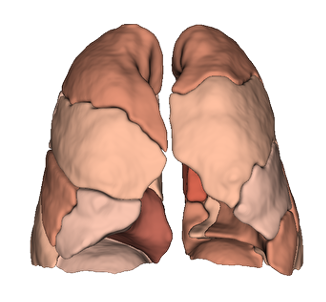
Pulmonary segments
Anatomical segmentation
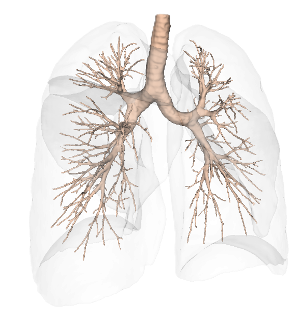
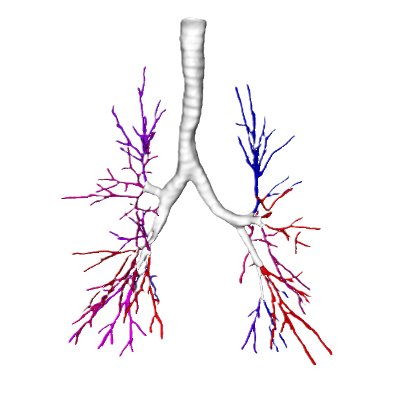
Bronchial tree
Anatomical segmentation
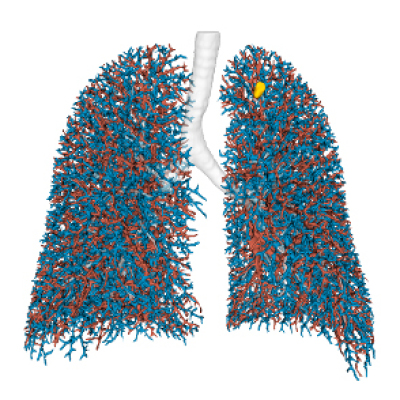
Pulmonary arteries & veins
Quantitative assessment
Emphysema severity
Quantitative assessment
Fissure completeness
Quantitative assessment
Trapped air / Hyperinflation
Quantitative assessment
Bronchial wall thickness
Quantitative assessment
Mucus plugs
Quantitative assessment
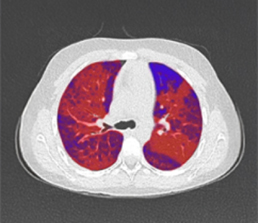
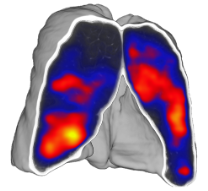
CT approximated perfusion defects
Quantitative assessment
Lung nodule identification
Quantitative assessment
Bronchial narrowing/widening
These LungQ® modules integrate into early R&D as well as interventional systems and clinical workflows, supporting personalized procedural planning, real-time guidance, and longitudinal follow-up. The underlying algorithms are trained on deeply characterized phenotypic datasets to ensure robustness across disease severity, scan quality, and anatomical complexity.
OEM-ready application-specific solutions
Building on these modular capabilities, we offer OEM-ready imaging solutions composed of combined high-performance capabilities from our advanced technology portfolio, purpose-built to support locally targeted bronchoscopic and surgical interventions across key therapeutic areas.
These solutions are designed for integration into clinical decision-support environments deliver quantitative, anatomically precise insights to support:
- Treatment target identification
- Patient selection and eligibility assessment
- Pre-operative planning of virtual bronchoscopy pathways
- Post-treatment evaluation and response monitoring
Emphysema / Hyperinflation
BLVR implants | Parenchymal ablation | Surgical tissue resection
Chronic airway disease
Mucus clearance | Airway ablation
Lung cancer treatment
Peripheral lung nodule biopsy | Lung tumor ablation | Local drug delivery | Segmentectomy
Note: Thirona’s LungQ® technology platform offers a portfolio of measurements and analytical capabilities intended for either clinical use or clinical research . Availability and intended use of the analysis may vary by geography. Please contact us for further information regarding the latest regulatory status in your specific market and its suitability for your intended use.

Use cases driving advancement of precision medicine
AI-based quantitative analysis in evaluating the efficacy of Bronchial Rheoplasty
Chronic Bronchitis(CB) is characterized by excessive airway mucus production and is often associated with significant airway obstruction from mucus plugs. Bronchial Rheoplasty(BR) treatment is expected to address mucosal inflammation and hypersecretion.
By leveraging LungQ® MP analysis and bronchi analysis, the treatment effect has been quantitatively proven evident on CT imaging: CB patients experienced a significant reduction in mucus plugs in 6 months following BR. This objective improvement directly aligns with patient-reported symptom relief, confirming the therapeutic mechanism.
Advanced airway segmentation for navigational bronchoscopy planning
Recent studies demonstrate that LungQ®’s airway segmentation now matches and potentially surpasses expert-level manual assessment for bronchoscopy planning. By achieving subcentimeter alignment with expert-marked routes alongside fewer missed bifurcations, the AI tool provides a level of planning accuracy previously only mastered by experienced clinicians.
This evidence marks a major milestone in navigational bronchoscopy. By standardizing high-quality planning, LungQ® has the potential to broaden access to advanced navigational bronchoscopy, empowering clinical settings everywhere to deliver expert-level results at scale independent of local experience.
Validation studies
European Respiratory Journal
| November 2025
Quality of CT based airway segmentation software for navigation bronchoscopy
Patient eligibility and post-procedural assessment for Bronchial Lung Volume Reduction therapies
BLVR using one-way endobronchial valves is a highly effective treatment for patients with severe emphysema. However, procedural success also depends on an accurate selection of patients without collateral ventilation and sensitive post-treatment monitoring.
By leveraging Thirona’s AI-enabled quantitative assessment of interlobar fissure integrity, the presence or absence of collateral ventilation can be confirmed. Its accuracy correlates with the assessment made by Chartis System. The non-invasive tool can serve as a important biomarker to determine the patient eligibility of the therapy and significantly optimizing the selection process. Following the procedure, Thiona’s new analysis provides an automated detection and localization of endobronchial implants, enabling a more efficient evaluation of valve placement and longitudinal follow-up.
Assessment of Metered Cryospray (MSC) therapy in COPD patients with chronic bronchitis
MSC is an innovative intervention that uses titrated applications of liquid nitrogen to remodel the bronchial epithelium in patients with COPD and chronic bronchitis.
By leveraging Thirona’s LungQ® BA and VERA analyses, a recent study used objective AI metrics to accurately quantify these lung functional and structural changes that are invisible to the human eye. These analyses validates the efficacy of MCS not just in symptom relief but in reducing air trapping, increasing normal lung tissues and improving large airway remodeling
.
Validation studies
European Respiratory Journal
| January 2026
The effects of metered cryospray on quantitative computed tomography metrics in patients with COPD with chronic bronchitis
Scalable partnership
Whether advancing next-generation therapies, enhancing image-guided navigation tools, or powering robotic bronchoscopy platforms, Thirona’s AI technology can be used and adapted to align with diverse development roadmaps and system architectures.
With flexible delivery models and a portfolio spanning ready-to-integrate applications as well as tailor-made analytical capabilities, we partner with MedTech innovators from early design stages through clinical trials, regulatory processes, and clinical implementation.