
Fully Automated Quantification of Mucus Plugs
Advancing treatment of muco-obstructive airway diseases
As a key feature of chronic respiratory disease, mucus plugging is increasingly recognized as a clinically relevant imaging metric and therapeutic target, with growing importance in both clinical research and the development of novel therapies. Thirona's AI-derived LungQ® Mucus Plug analysis (LungQ® MP) has been extensively validated across global research initiatives including COPDGene, EMBARC, and ENRICH and utilized to evaluate effectiveness of new therapies.
Furthermore, these quantitative metrics continue to be explored as potential imaging biomarkers for disease management in clinical practice. By providing precise quantification of mucus plug burden, LungQ® MP delivers the objective data insights that enable:
- Reproducible longitudinal assessment for disease progression and treatment response evaluation
- Regional insights into airway obstruction, supporting deeper understanding of mucus disease mechanisms
- Characterization of mucus-dominant phenotypes, capturing patient heterogeneity across bronchial tree
- AI-derived imaging insights enhancing prediction of disease trajectory and patient risk assessment

High-precision sensitive imaging metrics
Leveraging advanced algorithms to anatomically segment the bronchial tree, LungQ® MP identifies and quantifies airway-occluding mucus plugs on CT. The analysis provides precise measurements of mucus plug count, volume, segment score, and density, quantified on lung, lobar and segmental levels.
Total number
of plugs per lung, lobe and segment
Total volume
of plugs per lung, lobe and segment
Segment score
number of segments with mucus plugs
Plug density
in Hounsfield Unit values per lung, lobe and segment
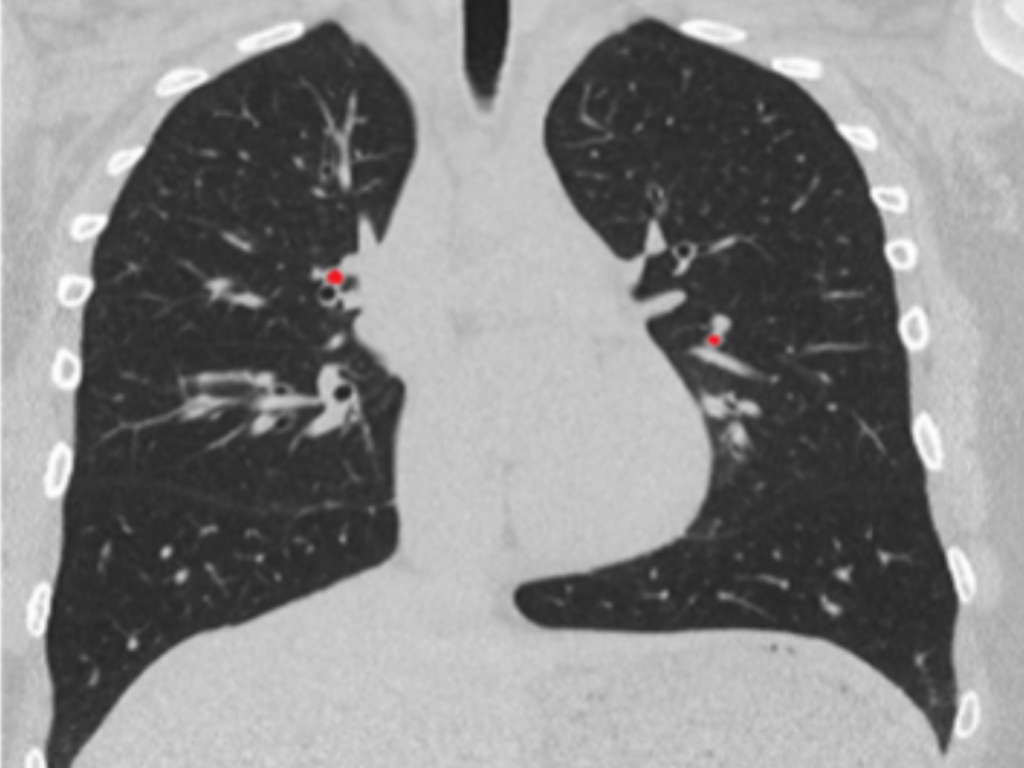
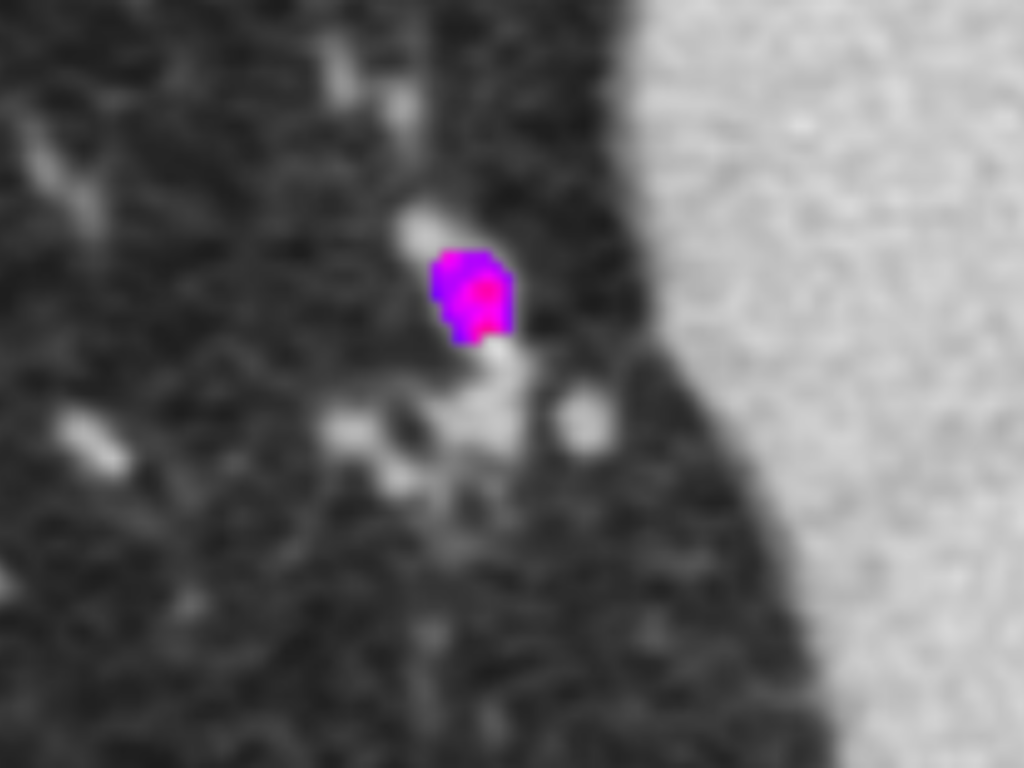
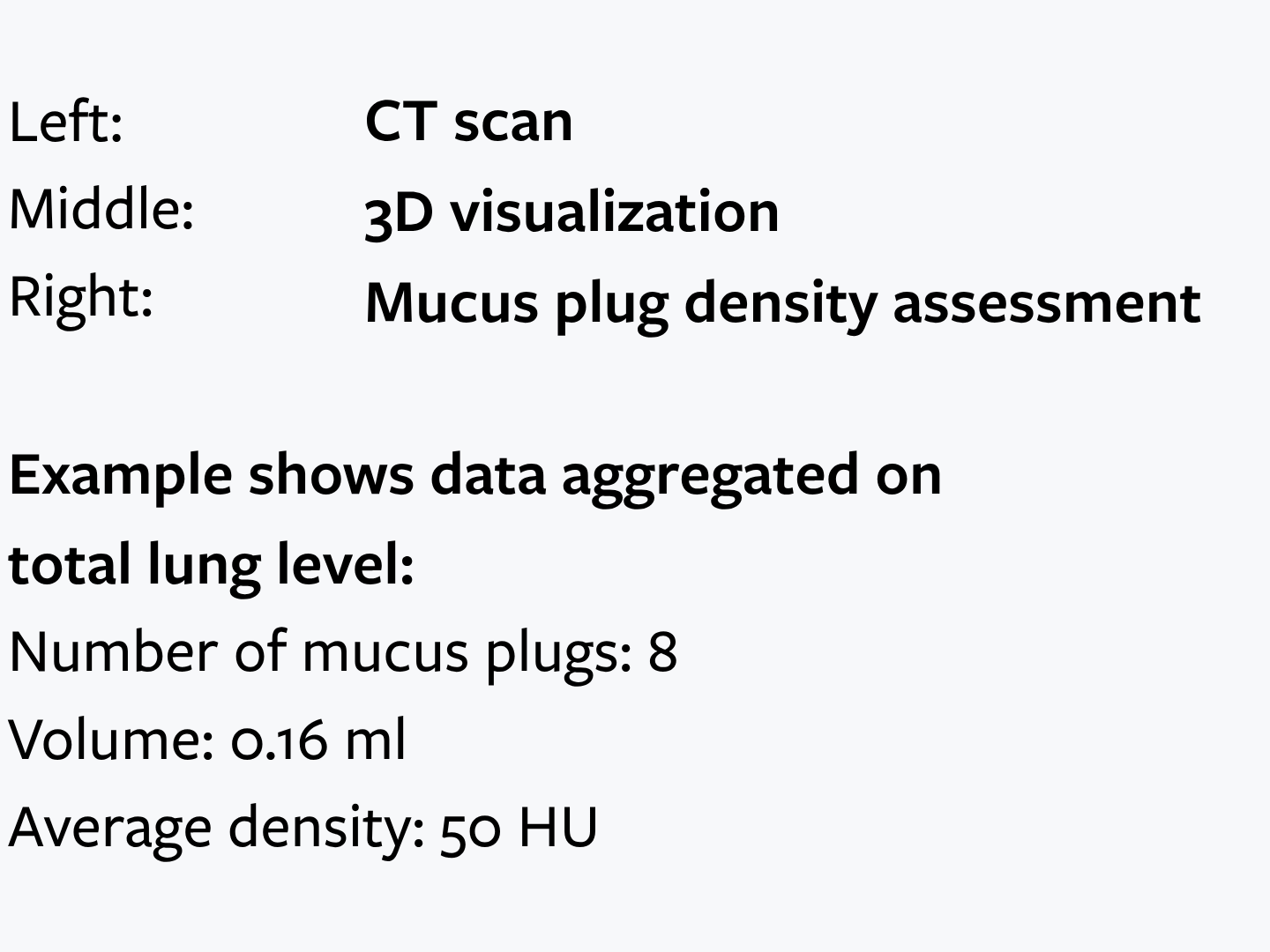
Notes: LungQ® MP analyses are intended either for clinical use or clinical research use. The status of CE marking in the European Union and FDA 510(k) clearance in the United States may vary per individual metric. Availability and intended use of the analyses may vary by geography. Please contact us for further information regarding the latest regulatory status in your specific market and its suitability for your intended use.
Featured examples of clinical applications
Primary/secondary outcome measures for clinical trial
LungQ® MP demonstrates performance comparable to expert visual assessment methods for mucus plug detection and quantification across major diseases. This analysis enables a detailed evaluation of mucus plug severity and regional distribution, offering high-resolution insights into lobar involvement.
By capturing the heterogeneity of mucus plug burden, both across large patient cohorts and within the individual patient, it provides the objective data necessary to serve as a reliable primary or secondary outcome measure.

Validation studies
American Journal of Respiratory and Critical Care Medicine
| June 2026
Concordance of Visual and Artificial Intelligence-Based Mucus Plug Detection on Computed Tomography in the COPDgene Study
European Respiratory Journal
| January 2026
Automatic detection of mucus plugs on computed tomography scans in severe paediatric asthma
European Respiratory Journal (ERS Congress)
| August 2024
Mucus Plug Lobar Distribution in COPD Using Automatic AI-Based Mucus Plug Quantification
Journal of Cystic Fibrosis
| August 2025
Validation of an artificial intelligence-based automated PRAGMA and mucus plugging algorithm in pediatric cystic fibrosis
Exploring the role of mucus plugs in disease progression through longitudinal and cross-sectional cohort analysis
LungQ® MP identifies the critical role of mucus plugs in disease progression, demonstrated through the 10-year COPDGene study, where automated mucus plug and bronchial measurements revealed a strong association between disease progression and key structural airway changes with progressors showing a significantly higher occurrence of mucus plugs over time. the analysis has also been applied to a large cross-sectional cohort, confirming that mucus plug number increases with higher GOLD stages, with a predominance of mucus plugs in the lower lobes.
By linking AI-enabled mucus quantification with bronchial remodeling, lung function, and inflammatory markers, LungQ® MP provides the objective, mechanistic insight needed to deepen understanding of disease activity, refine patient phenotyping, and identify patients most likely to benefit from tailored treatment.

Validation studies
American Journal of Respiratory and Critical Care Medicine
| May 2025
Assessment of 10-year Progression in COPDGene Using Automated Measurements of Bronchus-Artery Ratios and Mucus Plugging
European Respiratory Journal
| November 2025
COPD progressors vs. non-progressors: 10-year change in Bronchus-Artery ratios & mucus plugs
European Respiratory Journal (ERS Congress)
| August 2024
Mucus Plug Lobar Distribution in COPD Using Automatic AI-Based Mucus Plug Quantification
ERJ Open Research
| August 2025
Automated computed tomographic analysis of bronchial thickness and mucus plugs in bronchiectasis with asthma
Precise phenotyping based on mucus burden
Precise phenotyping is essential for the success of respiratory clinical trials. Capturing the severity of mucus plug burden both across large patient cohorts and across individual lobes, LungQ MP® provides the quantitative metrics enabling more accurate patient selection and the enrichment of clinical trial populations.
By integrating with other bronchial metrics, it provides a comprehensive view of lung structural abnormalities to support integrated structural phenotyping, which is critical for identifying distinct clinical phenotypes. Moreover, these imaging-based phenotyping insights could map to underlying inflammatory and molecular mechanisms, enabling a deeper understanding of disease mechanisms, further refinement of patient phenotyping, identification of patients more likely to benefit from tailored treatment, and more comprehensive evaluation of treatment response

Validation studies
European Respiratory Journal
| August 2026
Identification of CT-based Structural Alterations Resembling COPD in Individuals Without Airflow Obstruction (to be presented at ERS2026)
European Respiratory Journal
| January 2026
Automatic detection of mucus plugs on computed tomography scans in severe paediatric asthma
European Respiratory Journal (ERS Congress)
| October 2024
Automatic analysis of bronchus-artery ratios and mucus plugs of 640 chest CTs of EMBARC bronchiectasis patients
Journal of Cystic Fibrosis
| August 2025
Validation of an artificial intelligence-based automated PRAGMA and mucus plugging algorithm in pediatric cystic fibrosis
ERJ Open Research
| August 2025
Automated computed tomographic analysis of bronchial thickness and mucus plugs in bronchiectasis with asthma
Response evaluation of pharmaceutical and interventional treatment targeting mucus reduction
With the longitudinal insights into treatment response and the sensitive detection of subtle anatomical changes, LungQ® MP supports the evaluation of treatment efficacy across the full patient journey from early treatment response to long-term durability of therapeutic effects.
The analysis provides sensitive global and regional metrics to evaluate the efficacy of therapies targeting various mechanisms of mucus reduction, including improved mucus rheology and clearance, restoration of airway surface hydration, modulation of chronic or eosinophilic inflammation, as well as interventional approaches addressing mucosal inflammation and hypersecretion (e.g. bronchial rheoplasty).
It also enables assessment of heterogeneity in treatment response by correlating imaging findings with inflammatory biomarkers before and after treatment, and by quantifying mucus impaction at the lobar level to capture regional variation in response.

Validation studies
European Respiratory Journal
| September 2026
Bronchial segmental heterogeneity of responsiveness to modulator therapy in cystic fibrosis: linking structural improvements on computed tomography to inflammation in bronchoalveolar lavage fluid
European Respiratory Journal
| October 2026
AI-driven CT quantification of mucus plugs to evaluate the effect of inhaled hypertonic saline in children aged 3-6 years with cystic fibrosis
The Lancet Respiratory Medicine
| October 2025
Effect of elexacaftor–tezacaftor–ivacaftor on bronchial dilatations in adolescents with cystic fibrosis: a multicentre prospective observational study
American Journal of Respiratory and Critical Care Medicine
| May 2024
Bronchial Rheoplasty Reduces Mucus Plugging in Patients With Chronic Bronchitis
Chest
| July 2025
Airway mucus plugging in chronic bronchitis and the impact of Bronchial Rheoplasty
European Respiratory Journal
| January 2026
The effect of Elexacaftor/Tezacaftor/Ivacaftor (ETI) on bronchial tapering as marker of bronchial dilatation in people with CF aged 12 above (RECOVER study)
European Respiratory Journal (ERS Congress)
| October 2024
Automatic analysis of bronchus-artery ratios and mucus plugs of 640 chest CTs of EMBARC bronchiectasis patients
Research Square
| October 2025
The impact of dornase alfa on imaging features of bronchiectasis
Enhancing prediction of disease trajectories and patient risk assessment
Exploring clinical associations, characterizing disease trajectories, and enhancing risk prediction are essential for effective patient monitoring, treatment selection, and long-term disease management. LungQ® MP facilitates the identification of patients with a high mucus burden, supporting personalized disease management and precise risk stratification.
Furthermore, longitudinal analysis enables clinicians to correlate imaging biomarkers with clinical outcomes, improving the prediction of disease trajectories, including future exacerbations and mortality risk.